Brujería
Medicines the State Could Not Kill
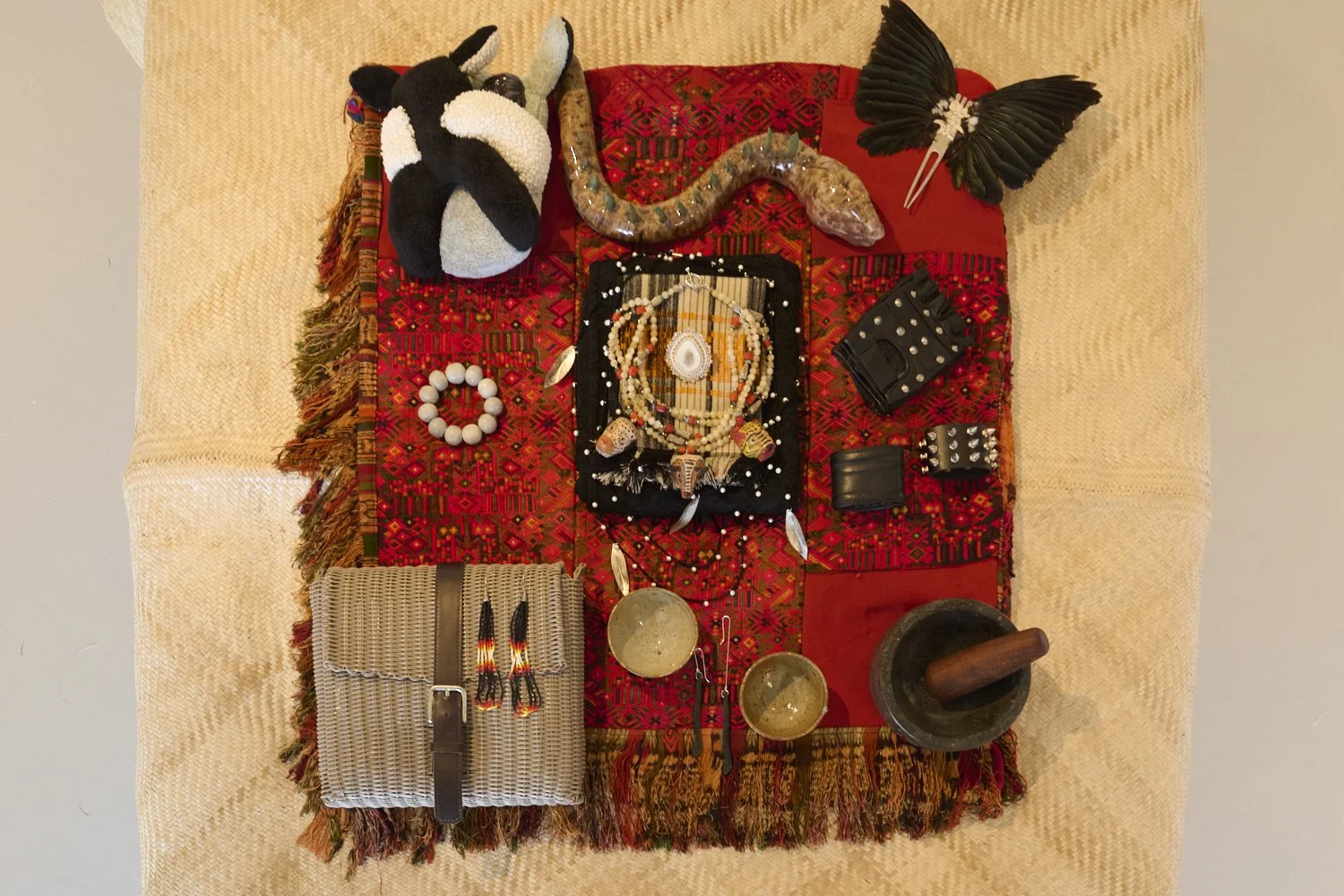
This altar brings together Indigenous and Afro-Indigenous spiritual practices through materials that have survived suppression, prohibition, and ridicule under different colonial regimes. Binding dolls, feathers, ceramics, antler, basalt, beads, and ritual vessels sit together as forms of knowledge once criminalised, regulated, or rendered illegible. In Abya Yala, such practices were named brujería (witchcraft), framed as danger or superstition. In Aotearoa and across Turtle Island, ceremony was restricted through legislation, bans, and surveillance, from the Suppression Acts to potlatch and powwow prohibitions.
These acts of spiritual repression are counteracted here by the adornment practice of Māori artist Aroha Millar, the carving of Nahua artist Mario Lopez Vega and Samoan ceramics by artist Amanda Stowers. These lineages meet without being collapsed. Through a binding doll by Nahua-Mestize artist ARIA XYX, this altar is also a binding love medicine, intimate and unapologetic, holding desire, kink, protection, and continuity. Through Brujería relation replaces suppression while living practices displace folklorization.
ARTISTS
Aroha Millar (Feather comb)
Amanda Stowers (Clay eel and coconuts)
ARIA XYX (Quedate, Clay, upcycled textile and glass beads)
Mario López Vega (Basalt molcajete)
José Luis Fernando Morales (Danza del Venado necklace, marble bracelet)
Jakob Olive (Elk antler, deer hide and sterling silver ring)
Los Colores de la Tierra (Ceremonial huipil Chichicastenango)
Ernesto Ovalle (Pounamu earrings)