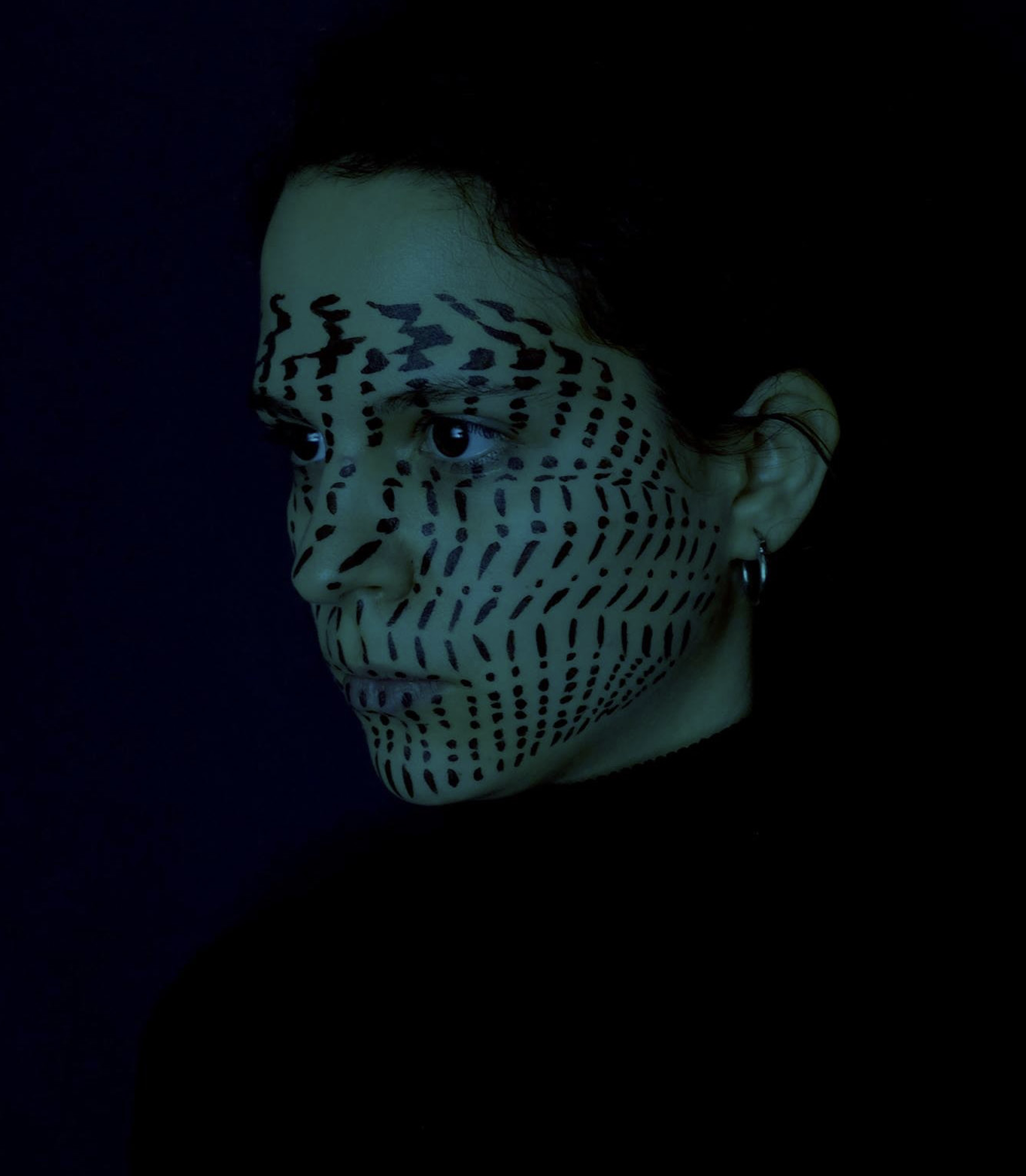
Descendant of Marie Valentin, a freed slave, and Pierre Bleu, a French soldier during the Algerian War, Camille Bleu-Valentin was born in 1995 in Paris. She spent her teenage years in New Caledonia before settling in Nantes, a former slave-trading port whose history further deepened her interest in colonial legacies.
During her studies at the School of Fine Arts, she took part in an Erasmus exchange in Turkey, followed by several training programs in Sarajevo, focused on art in post-war contexts—considering artworks as sensitive documents of an emergency, produced during or after conflict.
Her multidisciplinary artistic approach reflects the singularity of a complex French heritage, as she herself is a descendant of both colonizers and the colonized. She is currently continuing her research in several countries, with the goal of taking visual and plastic arts beyond major urban centers to benefit territories that are sensitive, traumatized, and far removed from cultural offerings.
For this purpose, she has, for several years, chosen to focus on developing inclusive artistic practices, aimed at highly diverse audiences (schoolchildren from early childhood to higher education, migrants, nursing homes, associations, specialized institutions, disadvantaged neighborhoods, hospitals, prisons, and penitentiary centers).

This residency is made possible with the generous support of the French Embassy and Villa Antipode
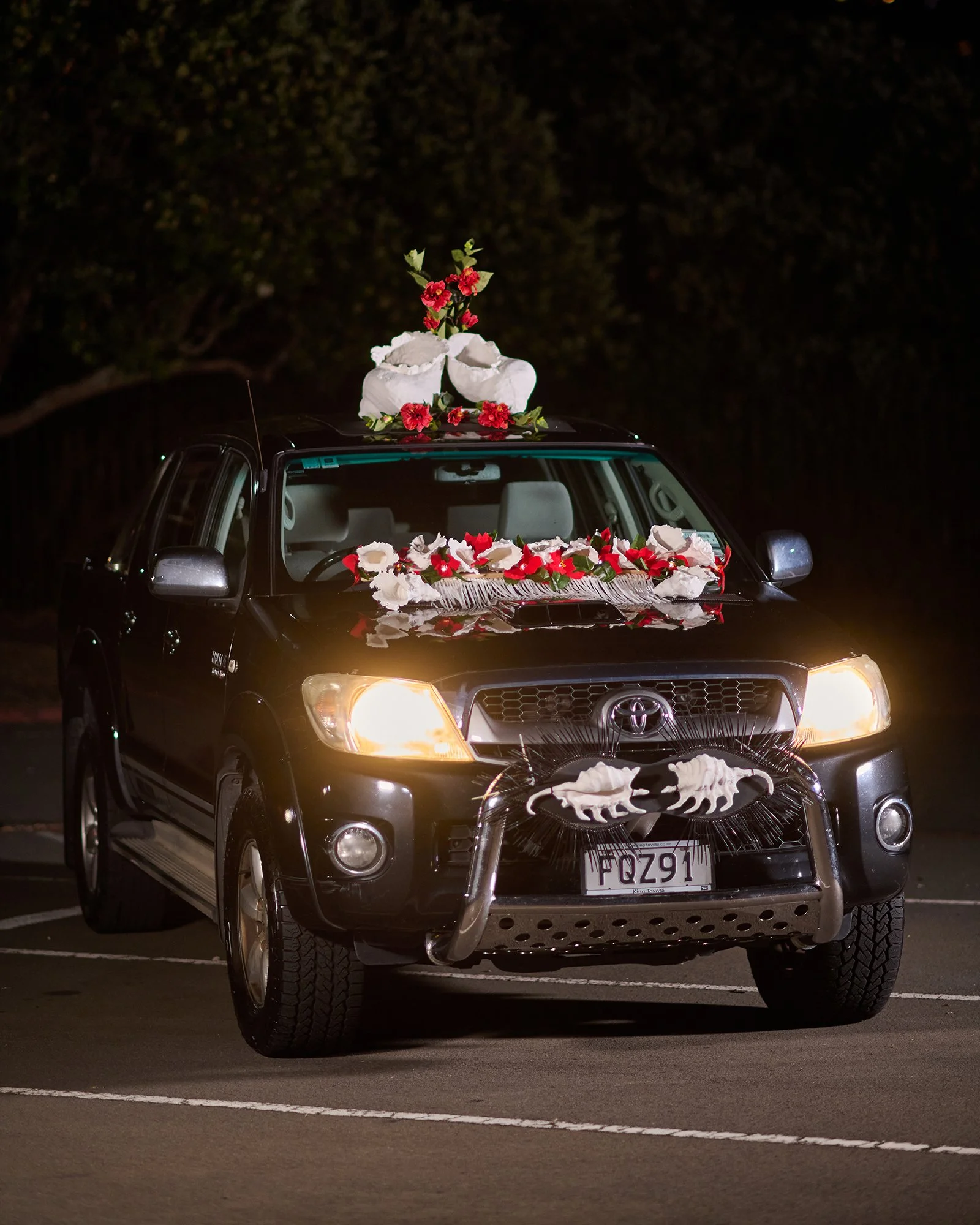
An image still from the night shoot to create the Polynesiaphonia moving image installation work. Camille created porcelain siren shells, a combination of real Pacific shells using 3D scans and printing, sourced from the collection at Te Papa Tongarewa, thanks to Kerry Walton, and partly fantastical and augmented by hand. Watch the artist talk video below to learn more about the process and practice that created this work.
During Camille’s residency, she achieved a magnificent feat of creating and exhibiting works at The Engine Room Gallery, including a video work created during a night shoot at Massey University. The video above is her artist talk, which had to be cancelled because of wild weather in Wellington, and so instead we created this recording to share the exhibition, its generation and resolution with you. Thanks to Camille for making time to do this in the last days before departure back to France.
Many thanks to the technicians at Massey, including Will Bennett, Mike Bridgman, Samuel Scully, Peter Miles, Jane Wilcox, Caitlin Devoy, Mike Jones, and to Te Whare Hēra interns Evelina Milward and Bee Putali. Thanks also to Martin Patrick, who was so organised and supportive of every aspect of the exhibition, and Emma Febvre-Richards and Amber-Jayne Bain who helped make it all happen.